

Professional Tree Removal & Landscaping in Selkirk & Surrounding Areas
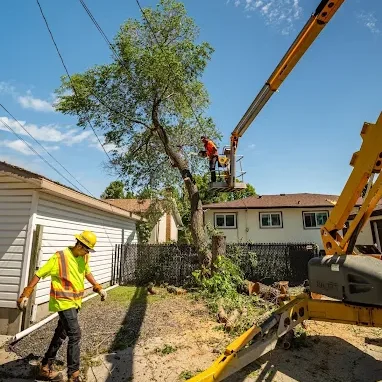
If you have a tree on your property that does not look right, you are probably wondering whether it needs to come down or whether it can be saved. Here is a straightforward breakdown of what to look for, so you can make the right call before a dead or damaged tree becomes a bigger problem.
In Selkirk and the areas around it, trees that lose their leaves seasonally will do just that every fall. So, if you see a tree without leaves in October, it’s probably not a big deal. But if you see a bare tree in the middle of July, that’s a different story.
To check if a tree is alive, try this simple test. Scratch the bark gently with your fingernail in a few different spots on the tree. If the layer underneath the bark is green and moist, that’s a good sign – it means the tree is alive and healthy. But if the layer underneath is brown and dry, it could be a sign that the branch or section of the tree is dead. By checking a few different areas, you’ll get a better idea of the tree’s overall health. This is a quick and easy way to determine if a tree is thriving or if it needs some extra care.
No leaves or buds during the growing season
Bark peeling away in large sections or falling off on its own
Soft, crumbly wood when you press on exposed areas
Mushrooms or shelf fungi growing at the base or on the trunk
Dead branches throughout the upper crown, especially if more than half the canopy is affected
Leaves that turn brown and stay on the tree instead of falling
Mushrooms at the base are worth taking seriously. They usually mean the inside of the trunk is already rotting, even if the outside still looks okay.
A tree does not have to be dead to be dangerous. These are the structural signs that point toward removal:
A sudden or worsening lean, especially after a storm or heavy rain
Soil heaving or cracking around the base on the opposite side of the lean
Deep cracks or splits running vertically through the trunk
Large hollows or cavities in the trunk or major branches
Branches hanging over your roof, driveway, or power lines with any of the above issues present
If there’s a problem with a tree and something important is nearby, the danger level goes up. For example, a tree leaning towards your house with a cracked trunk is a serious issue that needs attention right away, it’s not something you can just wait and see what happens with.
Trees in Selkirk have it tough – the conditions they’re in make them get damaged faster than trees in warmer places. You see, when it freezes and thaws over and over in the fall and spring, it makes any cracks they already have even bigger and weakens the wood that’s already compromised. And then there’s the heavy snow and ice – it’s like a big weight on the trees, especially the ones with big branches or trunks that are already split or weak. The wind from the prairies just adds to the problem, making it even harder for these trees to survive. It’s like a perfect storm of stress for them, and it can be really tough to withstand.
In harsh weather conditions, a tree that could normally survive for years can quickly turn into a serious threat after just one severe ice storm or a particularly tough winter.
In Manitoba, there are two major threats to trees that are particularly active in the Selkirk area, and they can be really devastating to the local tree population.
Dutch elm disease is a big problem for American elms. It spreads when elm bark beetles carry the disease from one tree to another. You can tell if a tree has the disease when one branch starts to turn yellow and wilt really fast. If you look under the bark, you might see brown streaks in the sapwood. The leaves on the infected branch will turn brown, but they won’t fall off the tree. Unfortunately, there’s no way to cure the disease once a tree is infected. The only thing you can do is cut down the tree and get rid of it according to the rules in your area. In Manitoba, for example, you’re not allowed to store or move elm firewood around. There are also rules about pruning elms – you’re not supposed to prune them between April 1 and July 31 each year. This is because the beetles that spread the disease are most active during this time, and pruning can make it easier for them to infect other trees.
If you have ash trees, you should know about the emerald ash borer. It can hurt all kinds of ash trees. To spot it, look for a few things: the top of the tree starts to die, there are D-shaped holes in the bark, woodpeckers are visiting a lot, and there are S-shaped tunnels under the bark. When a tree is really struggling, usually the only thing to do is remove it.
If you notice any of these issues with your elm or ash tree, don’t hesitate – the sooner you take action, the better. Removing the tree quickly can help prevent the problem from spreading to other trees nearby, which is really important for keeping your whole garden healthy.
If your tree only has a little damage, it’s probably okay to trim or treat it. This is especially true if the damage is just in a few branches and the main trunk and roots are still healthy. Also, if less than a third of the tree’s leaves are affected, trimming or treatment can be a good idea.
More than half the tree is dead or dying
The trunk has deep cracks, large cavities, or visible rot
Roots have failed or the tree is leaning suddenly
The tree is infected with DED or in advanced EAB decline
It is positioned where failure would hit your home, vehicle, or a power line
If a tree has a cracked trunk or its roots are failing, pruning it won’t really solve the problem. It’s just a short-term solution. The best thing to do is to remove the tree altogether, it’s the responsible thing to do.
If you have a tree on your property that’s been marked by the province, you need to get rid of it. The Town of Selkirk and the RM of St. Andrews are part of a program to manage Dutch Elm Disease in Manitoba. When inspectors mark a tree, it means it has to be removed and thrown away according to the program’s rules.
If you’re thinking of cutting down a tree on your property, it’s a good idea to check with your local government office first. They can tell you if you need a permit, especially if the tree is big or healthy. The rules are different in each area, so it’s worth asking to avoid any problems. Some places have specific rules about the size or type of tree that needs a permit, so it’s always best to check beforehand.
If you’re unsure about what to do with your tree, consider reaching out to the Town of Selkirk or the RM of St. Andrews for guidance. They can help you figure out the best course of action, especially if your elm tree has been marked for Dutch elm disease. In that case, they’ll take care of the removal and disposal for you, following all the necessary provincial regulations, so you won’t have to deal with it on your own.
If you’re worried about a tree on your property, Baxter Landscape and Tree Services can help. They offer free assessments, so you can get a better idea of what’s going on with your tree. Just give them a call and they’ll come take a look, giving you a straightforward answer about what needs to be done. This way, you can make an informed decision about your tree, whether it’s in Selkirk or a nearby area.